Did you know that snow is constantly transforming? Fresh snow, also known as powder snow (the Holy Grail that makes you feel like you’re gliding on a cloud…), is short-lived. Wind, sun and skiers passing through all change the structure of snowflakes. And that transformation obviously affects your sensations on the snow! Discover how to find good snow in spring.
As a bonus, in March and April, snowfalls are rarer and temperatures higher. You then ski on spring snow, which can be very pleasant to ride if you understand the transformation taking place at this time of year. Indeed, if you organise your day on the slopes poorly, you end up skiing on very hard snow in the morning and slushy soup by the end of the day. That’s a shame, because spring also means soft, pleasant, easy-to-ski snow… Here’s how to find good snow in spring.
Why is spring snow hard in the morning and slushy in the evening?
In spring, the sun warms the snow throughout the day. This warming makes the snow wetter and therefore richer in liquid water. That liquid water then freezes overnight as the temperature drops. That’s why the snow is so hard and icy in the morning at ski resorts in spring. It’s a snow that demands good technical control and that legitimately makes you fear getting hurt.
As the day goes on, the sun warms the snow again and by the end of the day forms what’s commonly known as “soup” — in other words wet snow that isn’t very pleasant to ski.
But between ice and slush, there’s a state of snow in spring that skiers love, known as “spring carpet”. It’s snow in the process of warming up: neither too frozen nor too warm.
In the heart of winter, snow doesn’t undergo such temperature variations. As long as powder snow stays cold, it doesn’t change state: it stays light. That’s why north-facing bowls hold powder snow for longer.


In what order to chain the pistes to find good snow?
So in spring, it’s really the snow’s temperature variations that interest us when looking for good snow. Now, 3 factors come into play in terms of temperature:
aspect (north, south, east, west), because the sun first warms the south and east faces, then the west, then the north;
time of day, because the further into the day, the more time the sun has had to warm the snow;
altitude, because on average you lose 1 degree for every 100 metres.
Choosing the right aspect for good spring snow
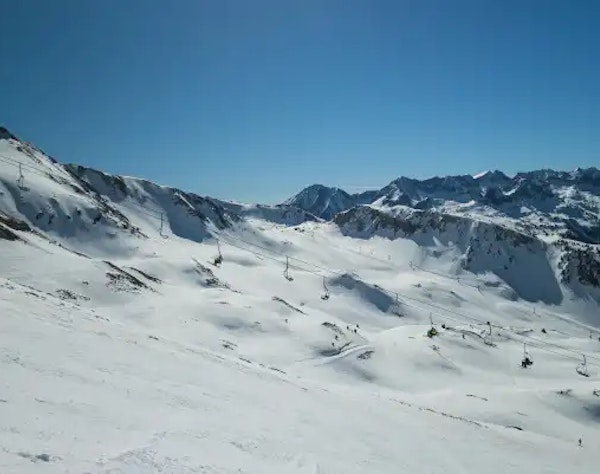
In spring, you should start your ski day on the pistes that catch the sun and warm up first. These are the east and south-facing runs. Then, as the day goes on, you gradually turn towards the west-facing pistes and finish with the north-facing ones once they’ve had enough sun to offer you a beautiful “spring carpet” to ski.
On resort maps, you can quickly see which pistes catch the sun in the morning! The darker areas drawn on the mountain reliefs represent north-facing slopes, which get less sun. The sunny faces are therefore those shown in white on the resort maps.



No need to be an early bird to enjoy spring skiing
Hitting the slopes too early in spring isn’t a good idea. You have to wait for the snow to “soften up,” that is, melt a little. On the other hand, leaving too late means everything may already be transformed and only soft, wet snow remains. The most relevant slot to enjoy spring skiing at a resort is therefore from 10 am to 3 pm.
Altitude can make all the difference in spring!
The higher you go, the colder it gets. That’s why the snow at the bottom of the resort melts first. So at the start of the day you should ski the pistes at the bottom of the area.
From one resort to another, or within the same resort, altitude differences affect the state of the snow. At altitude, the snow stays cold for longer. So in spring, the highest-altitude resorts can even keep some fresh snow! When skiing in March and April, it makes sense to turn to a high-altitude area or a resort with plenty of west- and north-facing pistes.
Enjoy spring skiing differently by trying ski touring
Unlike spring resort skiing, ski touring in April requires an early start. In spring, avalanche safety is a matter of timing. The more the snow warms up and gets wet, the more likely it is to form an avalanche. So getting into ski touring in spring is easier because the snow is easier to ski (you wait for it to soften up) and avalanche risk is easier to manage (you avoid sunny faces after 1 pm).


You now know how to organise your day on the slopes to avoid icy pistes in the morning and melted ones by evening… All that’s left is to choose a resort that suits your wishes to enjoy spring skiing: take a look at our selection of resorts for spring skiing.